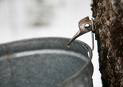
How to Make Maple Syrup in New Hampshire
Making maple syrup is a great way to
spend time with the family. In New Hampshire about 90,000 gallons of
Maple sap is collected every year. There are instructions below on
making your own Maple syrup at home.
How is Maple Syrup Made?
Maple Syrup is made by collecting sap
from Maple trees and boiling the sap down until you have Maple
syrup. Maple sap from the tree is about 98% water and 2% sugar.
Finished Maple syrup is 33% water and 67% sugar.
Questions? Check out our
Maple Sugaring Forum!
(no registration required, just post a question or comment!)
What Time of Year Can You Get Sap From a Maple Tree?
Maple syrup making in New Hampshire usually lasts for about 4-6
weeks and starts around the middle to the end of February and can
last until mid April depending on the temperatures and
weather. Cold nights that
fall below freezing and warm days make the Maple sap flow the best.
Maple sap runs out of any holes or scrapes in the tree bark this
time of year as a result of the frozen sap inside the Maple tree
thawing and building up pressure in the tree. This pressure is what
forces the sap out of the holes in the Maple tree.
How Much Maple Sap Does it Take to Make Maple Syrup?
It takes approximately 40-45 gallons of Maple sap to make just one
gallon of Maple syrup. This can vary from different types of Maple
trees. This can also vary depending on how you tap the Maple tree,
the temperature outside and the time of season. During the "Sugar
Run" Maple sap can run fast. So be sure to check your buckets often.
What Kind of Maple Trees Can You Tap To Get Maple Sap?
It is best to use Sugar Maple and Red Maple trees to collect sap.
The sap from these trees has a higher sugar content and will produce
more Maple syrup per gallon of Maple sap.
Maple Syrup Making Instructions:
To make Maple Syrup at home, you will need to get a few items. The
items below are for the backyarder, If you decide to do this
professionally, you should get better equipped.
-
Taps (these can usually be found at feed/farm supply stores or
online)
-
Buckets (you can buy the real maple syrup collecting buckets
from a farm supply store, online or you can even use a 5 gallon
pail). If you use a pail you will need to make a cover for each
pail. Make sure buckets are clean but do not use soap to clean
them as it will change the taste of your Maple syrup, be sure
they are well rinsed and never used for hazardous chemicals.
-
A candy thermometer (found at cooking stores or craft supply
stores)
-
Large pots/pans to boil sap in. If you're boiling alot of Maple
sap, it should be done outside and by using a larger set up like
an empty 55 gallon metal drum for a fire pit with a large pan on
top.
-
Cheesecloth (coffee filters if you have nothing else)
-
Containers to put your Maple syrup in when done.
How to Tap a Maple Tree:
Maple
trees should be a minimum of 8" in diameter. Smaller trees work, but
it's usually not worth the trouble. Holes should be drilled about
4-5 feet from the ground. Drill the hole for the tap (normally 1/2"
diameter holes but be sure to check your taps). Holes are normally
drilled about 2" deep into the Maple tree, but again, be sure to
check the depth of the tap. Place the tap in the Maple tree, gently
bang it with a hammer if needed. The tap should be tight in the
tree. You should already see Maple sap slowly dripping from the tap.
Place the hook that came with the tap onto the tap and hang the
bucket from the hook. It is best to keep the top of the bucket
covered to prevent rain, tree bark or other objects from getting
into the sap. As an alternative to the normal maple syrup collecting
buckets, you can use an idea we came up with as shown below:

This is a simple and much less expensive solution than the
traditional metal buckets. We used Tractor Supply buckets
($2.99/each, plus the lids for $1.99/each. The used 3/4" ID clear
tubing at $1.39/foot. You will need about 10" of tubing per bucket.
If you use this method, be sure to use the metal taps as the plastic
maple syrup taps won't hold the weight of 5 gallons of sap and will
break, or you can buy more tubing and place the buckets on the
ground or on blocks and extend the tubing from the Maple tree. We drilled 3/4" holes in the plastic lids, this will make the
seal between the clear tubing and the lids very tight and will keep
out and debris, rain or snow from entering the sap in the bucket.
For a cheaper solution, buy 5/16" tubing and the plastic spouts and
T's from a farming supply store or maple sugar house that sells
sugaring supplies. Some retail stores like Tractor Supply, Agway and
Blue Seal Feeds may also carry these items. This type of set up is
shown below.

Storing Maple Sap:
It is best not to store Maple sap for very long. Once
the bucket is full, you should begin the boiling process. Storing
Maple sap will make the sap spoil.
How to Boil Maple Sap Into Sugar:
Boiling Maple sap and turning it into Maple syrup is a slow process.
The goal is to boil out most of the water, leaving the Maple syrup.
If you plan on boiling down sap in the house, there are a few things
to remember. First, boiling Maple sap produces lots of steam that
will coat your walls, ceiling, windows, cabinets, and everything
else nearby with moisture from the boiling Maple sap. There is also
a little bit of sugar evaporating as well. So not only will the
humidity and sweet smell fill the air and your wallpaper peel off,
but it will also attract ants a few weeks later.... lots of
ants! So you will need to ventilate the area well and wash down what
does get coated in moisture or you will be buying ant traps by the
truckload. It is best to boil the Maple sap outside. A cheap
solution for boiling Maple sap outside is to use a 55 Gallon metal
drum that was used for food products like juices, drinks or cooking
oils. Cost was $12.00.


We used a regular 55 gallon drum (used for food products) with a permanent lid.
We flipped the
drum on it's side and cut one large hole. Then we used 2 shallow 18"
steam table pans. We made sure we cut the hole just big enough to
fit the 2 pans into. Be sure not to cut the hole too deep, you want
the bottom of the pans (not the lip) resting on the metal drum. As
you can see in the photo, we cut it very shallow. Then, we used the
hole as an air source for the fire and feed the fire from the top.
this requires removing the hot pans occasionally to load in more
wood. Use extreme caution, the drum gets very hot!
When boiling Maple sap, don't let the sap boil all the way down. You
want to keep the boiling pot of sap topped off. You will also want
to skim off the foam from the top of the boiling Maple sap.
How to "Finish" Maple Syrup:
The finishing process of Maple syrup can be a little tricky. Maple
syrup is finished when it is boiling at 7.5 degrees Fahrenheit over
the temperature that water boils at for that day in your area. To
find the temperature of boiling water for your area and daily
conditions, boil a small pot of water on your stove top. Most
commonly water boils at 212 degrees Fahrenheit. Different altitudes
have different boiling points. Using 212 degrees Fahrenheit as an
example, the Maple syrup would be done when it is boiling at 219
degrees... But again, be sure to check as it is important you get it
right. If it's not right the Maple syrup will go bad and all your
efforts are lost!

Maple syrup boiling - almost finished!
(note the fizz-like bubbles)
Once the Maple syrup gets close to being finished, watch the Maple
syrup very closely as it can boil over fast and make a huge (very
huge) mess and can ignite if it boils onto a hot stove!
You will notice the bubbles get smaller and more frequent, almost
like fizz from a softdrink, but a lot more bubbles. Once it looks
like it is about to boil over, cut the heat back and boil a little
longer (depending on how much syrup you have. Usually another 15
minutes
for a half gallon of syrup. At this point start to test the syrup by
using a metal spoon and scooping a little syrup out of the pot. Let
it slowly trickle back into the pot while you watch the syrup drip
off the spoon. The last few drops will look gooey and hang off the
spoon (instead of like a drip of water) if the syrup is done.
It will also taste very sweet like Maple syrup. These are all signs
that your Maple syrup is either done or almost done.
Remember, the Maple syrup is done boiling when the temperature
reaches 7 degrees Fahrenheit over the temperature that water boils
at in your area.
Filtering the Maple Syrup:
Now that the Maple syrup is done, you will want to get out all the
objects that are floating around in the pot. You can either strain
the Maple syrup through a cheesecloth or coffee filter or you can
let the Maple syrup cool down and settle. Most of the objects that were
floating around will sink to the bottom as will the Maple Sugar
sediment (Aka 'Maple Sand" or "Sugar Sand"). Once it all settles,
carefully pour off the "Good" Maple syrup, leaving the junk and
sugar sand in the bottom in the pot. For the clearest Maple syrup,
let the syrup cool and settle and discard the cloudy syrup at the
bottom. You will still want to strain the syrup to get out any
remaining debris.
Storing Maple Syrup:
The best way to store Maple syrup is to put it in the freezer (Maple
syrup won't freeze if it's finished correctly, if it does freeze, it
needs to be boiled down more). Be sure to check it occasionally.
You can also bottle it or can it. If you decide to bottle it or can
it you will want to pour the syrup in the containers at about
180-190 degrees Fahrenheit and seal them well to prevent it from
spoiling.
Questions?
Check out our
Maple Sugaring Forum!
(no registration required, just post a question or comment!)
Check out our Live NH Webcams!
|